

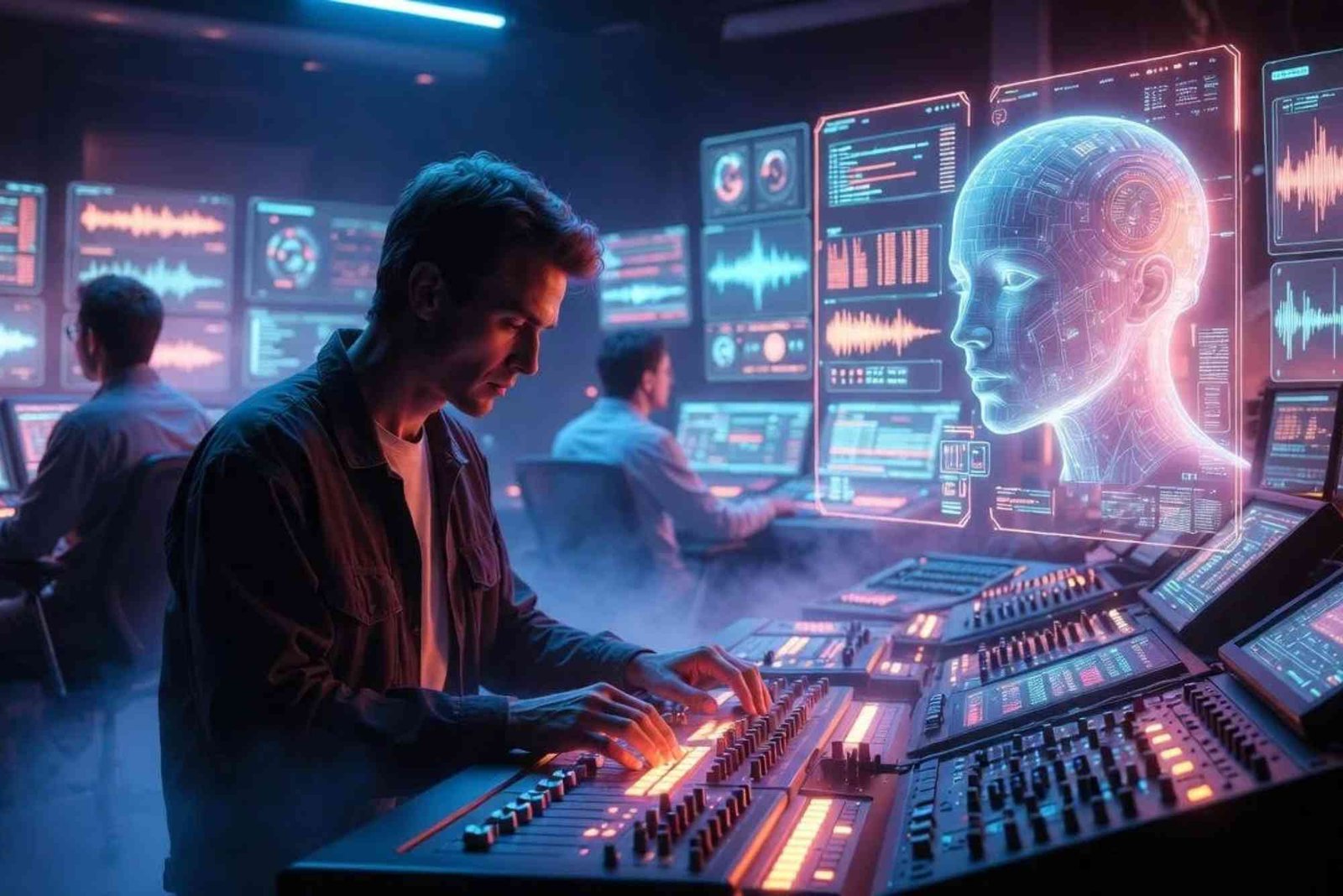
Introduction
How technology is changing music production has become one of the most important topics in the modern music industry. From home studios to global collaborations, digital innovation is transforming how music is created, edited, and shared. Artists no longer need expensive studios or large teams to produce professional-quality tracks.
Evolution of Music Production Technology
The journey of how technology is changing music production started with analog equipment. In the past, musicians relied on tape recorders, large mixing consoles, and physical instruments. Production was expensive, time-consuming, and limited to professional studios.
Over time, digital technology replaced analog systems. This transition opened the door to computer-based production. The shift allowed producers to edit sound with precision, store unlimited tracks, and experiment without wasting physical resources.
This evolution shows how technology is changing music production by breaking traditional barriers and allowing more people to enter the music industry.
From Analog to Digital Transformation
The move from analog to digital was revolutionary. Sound could now be recorded, edited, and manipulated using software. This change reduced production costs and improved efficiency.
Rise of Home Studios
Another major shift in how technology is changing music production is the rise of home studios. Affordable equipment and software made it possible for artists to work from anywhere without compromising quality.


Digital Audio Workstations (DAWs)
Digital Audio Workstations, commonly known as DAWs, are at the heart of how technology is changing music production. These software platforms allow producers to record, edit, mix, and master music all in one place.
DAWs like Ableton Live, FL Studio, and Logic Pro have replaced traditional recording studios for many creators. They offer flexibility, speed, and powerful editing tools that were once only available in high-end studios.
Simplifying the Production Process
DAWs simplify complex production tasks. Users can layer sounds, adjust timing, and apply effects with just a few clicks. This simplicity is a key reason how technology is changing music production at every level.
Unlimited Creative Control
Producers now have unlimited creative control. They can undo mistakes, experiment with different sounds, and refine tracks without limitations. This flexibility encourages innovation and experimentation.
AI and Machine Learning in Music Production
Artificial Intelligence is playing a major role in how technology is changing music production. AI tools can now generate melodies, suggest chord progressions, and even assist in mixing and mastering tracks.
Machine learning algorithms analyze large amounts of music data to understand patterns and trends. This helps producers create music that aligns with audience preferences while maintaining originality.
AI-Assisted Composition
AI can generate musical ideas in seconds. While it does not replace human creativity, it supports artists by providing inspiration and reducing creative blocks.
Smart Mixing and Mastering
AI-powered tools can automatically balance sound levels, improve clarity, and enhance audio quality. This has significantly reduced the time required for post-production.
Virtual Instruments and Plugins
Virtual instruments and plugins are another key factor in how technology is changing music production. These tools replicate real instruments digitally, allowing producers to create orchestral sounds, drums, guitars, and synthesizers without physical equipment.
Plugins also enhance sound design by adding effects like reverb, delay, compression, and distortion.
Expanding Sound Possibilities
Producers now have access to thousands of sounds at their fingertips. This expansion has made music production more diverse and creative than ever before.
Cost-Effective Production
Instead of buying expensive instruments, producers can use virtual alternatives. This affordability is a major reason how technology is changing music production globally.
Cloud Collaboration and Remote Production
Cloud technology has transformed collaboration in the music industry. Artists and producers can now work together from different parts of the world in real time.
This development is a powerful example of how technology is changing music production by removing geographical barriers.
Real-Time Collaboration
Cloud-based platforms allow multiple users to edit and review tracks simultaneously. This speeds up the production process and improves teamwork.
Easy File Sharing
Large audio files can be shared instantly without physical storage devices. This convenience has made music production more efficient and organized.
Mobile Music Production
Smartphones and tablets have also contributed to how technology is changing music production. Mobile apps now allow users to create beats, record vocals, and edit tracks on the go.
This mobility has opened music creation to a much wider audience.
Music Creation Anywhere
Artists can now produce music while traveling, commuting, or relaxing at home. This flexibility encourages constant creativity.
Powerful Mobile Apps
Apps like GarageBand and BandLab provide professional-level tools in mobile devices. This proves how technology is changing music production by making it more portable and accessible.
Impact on Creativity and the Music Industry
The influence of how technology is changing music production goes beyond tools and software. It has reshaped creativity and the entire music industry structure.
Producers now experiment more freely without financial pressure. Independent artists can release music without record labels. Streaming platforms allow instant global distribution.
Democratization of Music
Technology has made music production accessible to everyone. This democratization has increased diversity in music styles and voices.
Faster Production Cycles
Songs that once took weeks or months can now be completed in days. This speed allows artists to stay relevant in a fast-moving industry.
Challenges of Technological Advancements
While how technology is changing music production brings many benefits, it also presents challenges. Over-reliance on digital tools can sometimes reduce originality. The market is also becoming highly competitive due to easy access. Artists must balance technology with creativity to maintain authenticity in their work.
Future of Music Production Technology
The future of how technology is changing music production looks even more advanced. Emerging technologies like virtual reality studios, immersive audio, and AI-generated music will continue to evolve the industry. We may soon see fully automated production environments where artists collaborate with intelligent systems in real time.
Conclusion
How technology is changing music production is a continuous journey that reshapes creativity, accessibility, and industry standards. From DAWs and AI tools to cloud collaboration and mobile apps, technology has made music production more powerful and inclusive. Artists today have more freedom than ever before to explore, create, and share their music with the world.
Top Cybersecurity Innovations for 2025 highlight advanced AI-driven threat detection, zero-trust architecture, and quantum-resistant encryption. These technologies are transforming digital safety for businesses and users worldwide. For more details, explore our internal guide using this ka anchor text: ‘Top Cybersecurity Innovations for 2025’ to stay updated with the latest security trends and solutions.
FAQs
What is the biggest impact of technology on music production?
The biggest impact is accessibility. Anyone can now create professional-quality music using affordable digital tools and software.
How is AI changing music production?
AI assists in composing, mixing, and mastering music. It helps producers generate ideas and improve sound quality efficiently.
Can beginners start music production at home?
Yes, beginners can easily start using DAWs and basic equipment at home without needing a professional studio.
Are virtual instruments replacing real instruments?
Virtual instruments are not replacing real ones but providing flexible and cost-effective alternatives for producers.
Why is cloud collaboration important in music production?
It allows artists from different locations to work together in real time, making production faster and more efficient.
What is the future of music production technology?
The future includes AI-driven production, immersive sound experiences, and more advanced digital collaboration tools.
Related Reading: How Technology Is Improving Transportation
Related Reading: How Technology Helps Improve Education Today — full guide
Related Reading: How Technology Is Helping Small Businesses Grow — full guide
Related Reading: How Technology Supports Disaster Management — full guide